
Why Soil Tests Don’t Tell the Whole Story
Soil biology, root activity, carbon cycling, and seasonal variability all influence nutrient availability beyond what a single test can capture.
The Soil is not static
Most fertility programs begin with a soil test.
All for good reason.
Soil testing provides critical insight into:
- nutrient levels
- pH
- salinity
- cation exchange capacity (CEC)
- organic matter
- micronutrient availability
These measurements help growers make informed decisions about crop nutrition, amendment selection, and seasonal fertility planning.
But there’s an important limitation that often gets overlooked:
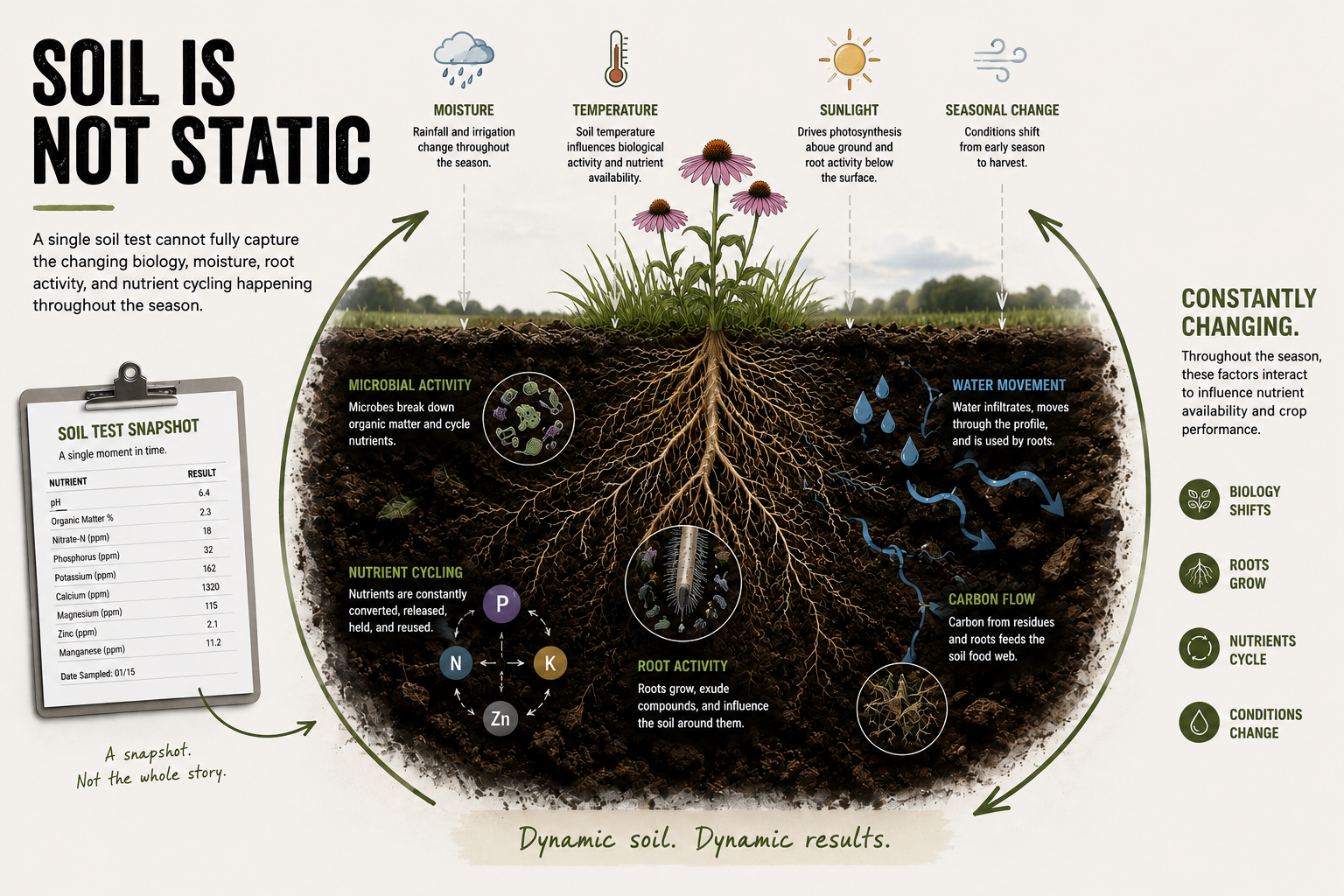
A soil test captures conditions at a single moment in time.
It does not fully capture the dynamic biological and environmental processes constantly occurring below the surface.
Soil Is a Living System
Unlike a static storage container, soil is continuously changing.
Every day, countless biological and physical processes influence:
- nutrient availability
- water movement
- microbial activity
- oxygen levels
- root development
- mineralization rates
- nutrient retention
Temperature changes.
Moisture changes.
Root activity changes.
Microbial populations shift.
Carbon sources fluctuate.
All of these factors influence how nutrients behave throughout the growing season.
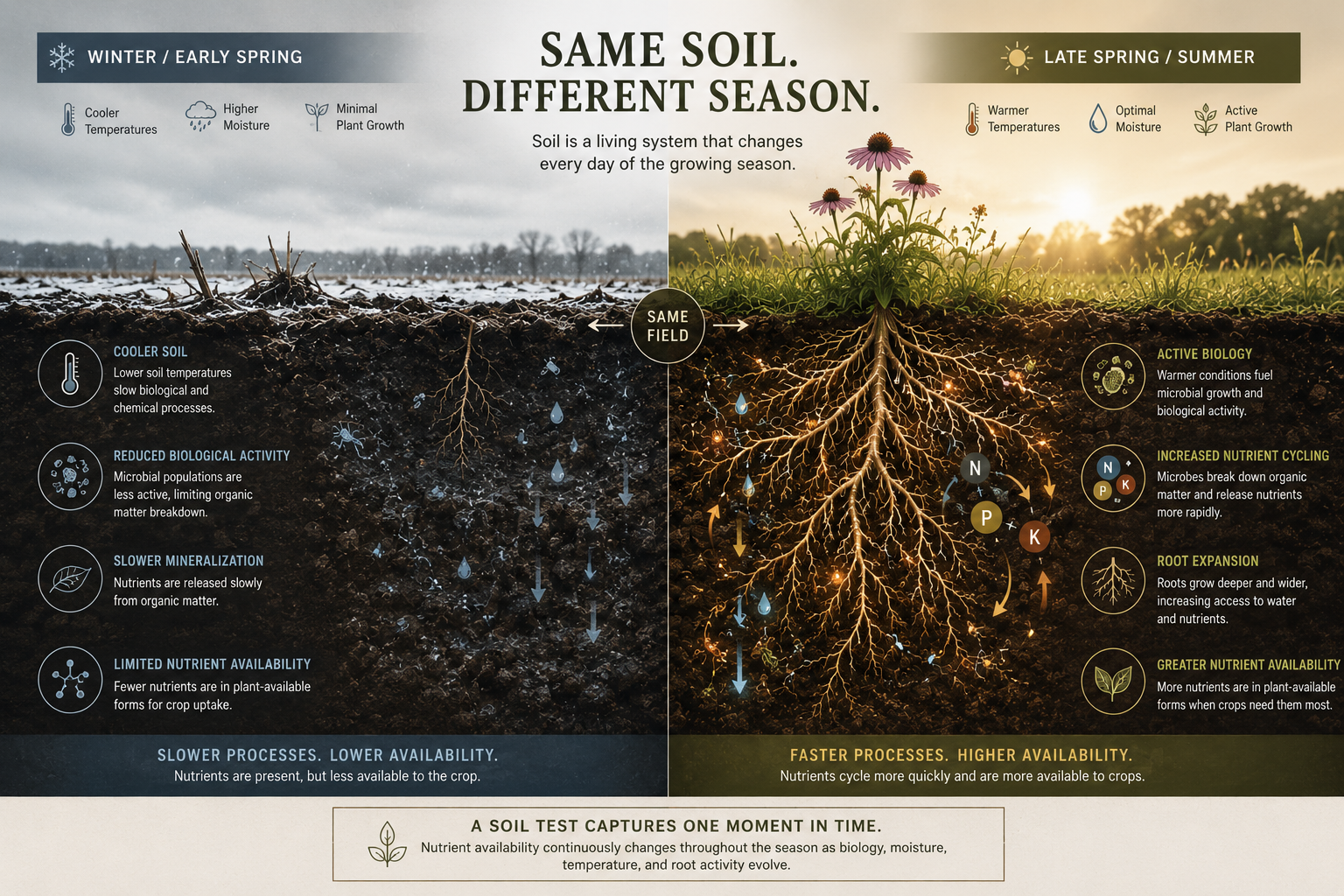
That means the nutrient availability measured during a winter soil test may look very different by late spring or midsummer.
Nutrients Present ≠ Nutrients Available
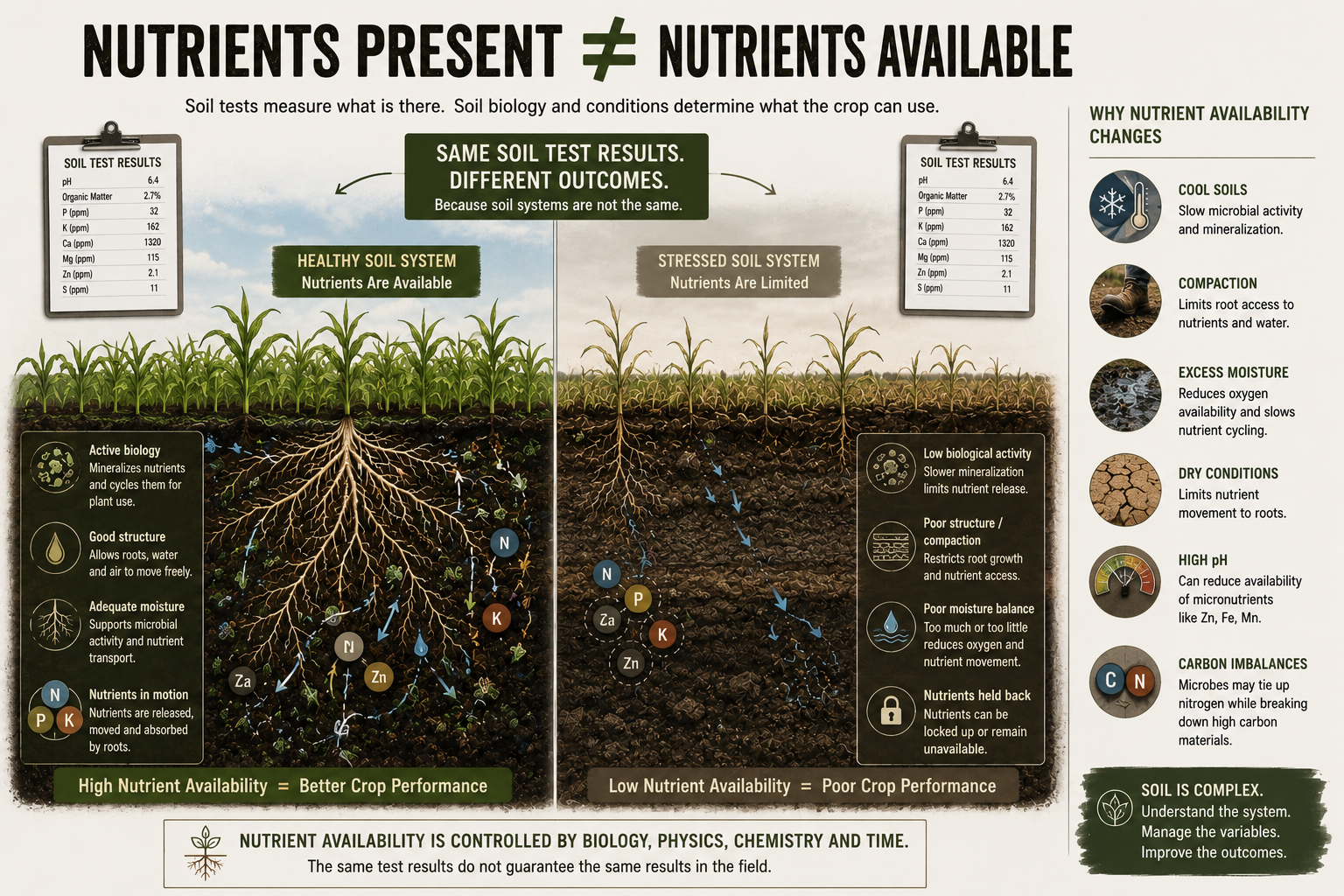
One of the most common misconceptions in fertility planning is assuming that nutrients measured in the soil are automatically available to the crop.
In reality, nutrient availability depends heavily on soil conditions and biological activity.
For example:
- Cool soils can slow microbial mineralization
- Compaction can limit root access
- Excess moisture can reduce oxygen availability
- Dry conditions can limit nutrient movement
- High pH can reduce micronutrient availability
- Carbon imbalances can temporarily tie up nitrogen
Two fields with nearly identical soil test results can behave very differently under real-world growing conditions.
Because the soil system itself is different.
Seasonal Variability Changes Everything
Seasonal variability is one of the biggest reasons static fertility assumptions can fall short.
Early-season conditions may favor slower nutrient release due to cooler soil temperatures and reduced biological activity.
Later in the season:
- warmer temperatures
- increased root growth
- irrigation cycles
- active microbial populations
can dramatically change how nutrients move and become available within the root zone.
This is particularly important in organic systems, where many nutrients rely on biological mineralization before crops can fully access them.
A fertility program that works well during one part of the season may behave differently later under changing environmental conditions.
A More Complete View of Soil Fertility
Soil testing remains one of the most valuable tools available to growers.
But resilient fertility programs go beyond chemistry alone.
They account for:
- biological activity
- root interactions
- soil structure
- water movement
- carbon cycling
- seasonal shifts
Because productive soils are not static systems.
They are living ecosystems constantly adapting to environmental conditions both above and below the surface.
And understanding that complexity is one of the most important steps toward building stronger, more resilient agricultural systems.
Get Your Custom Quote
Fill out the form and one of our agronomists will reach out with a personalized recommendation.
"*" indicates required fields